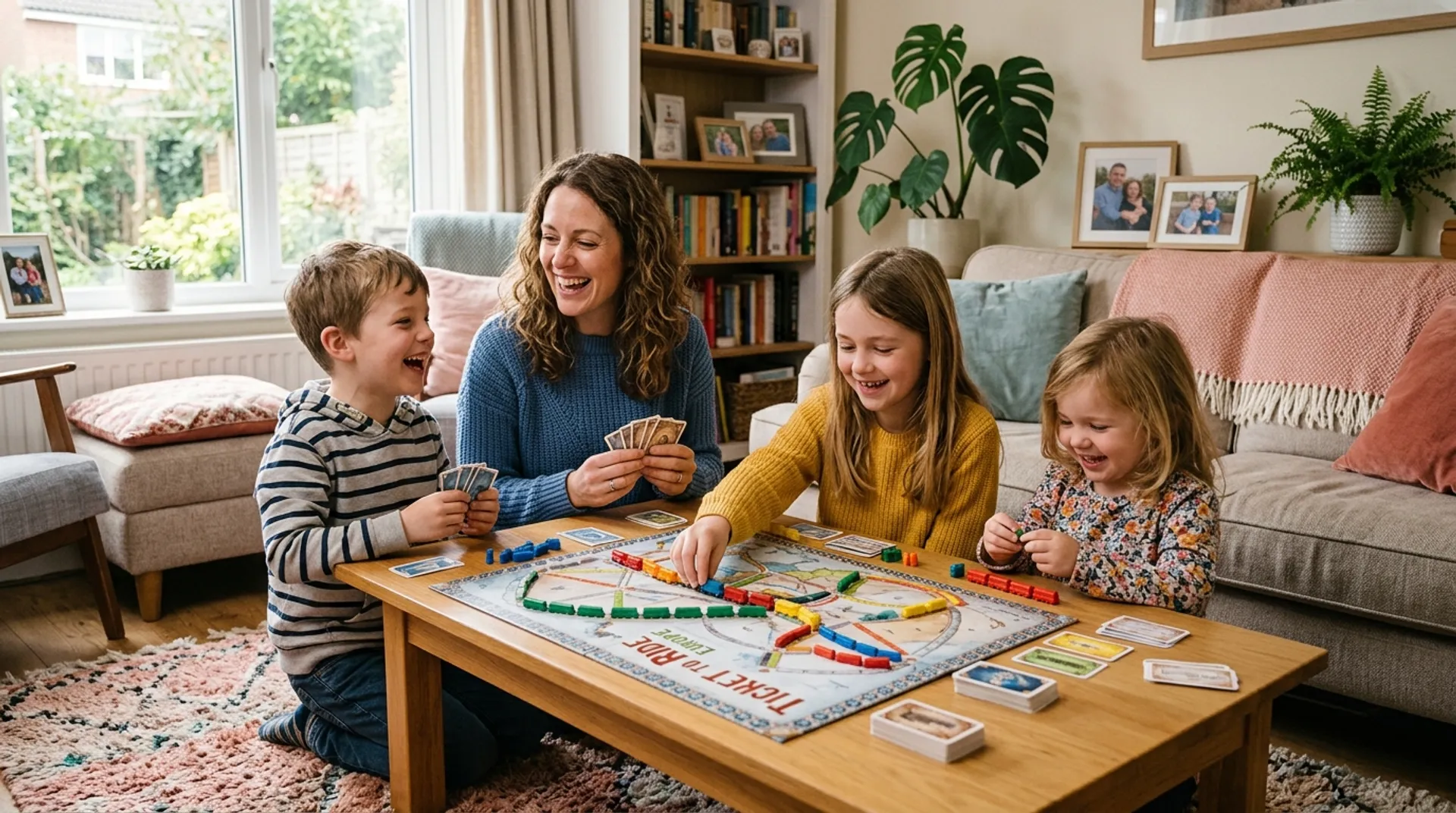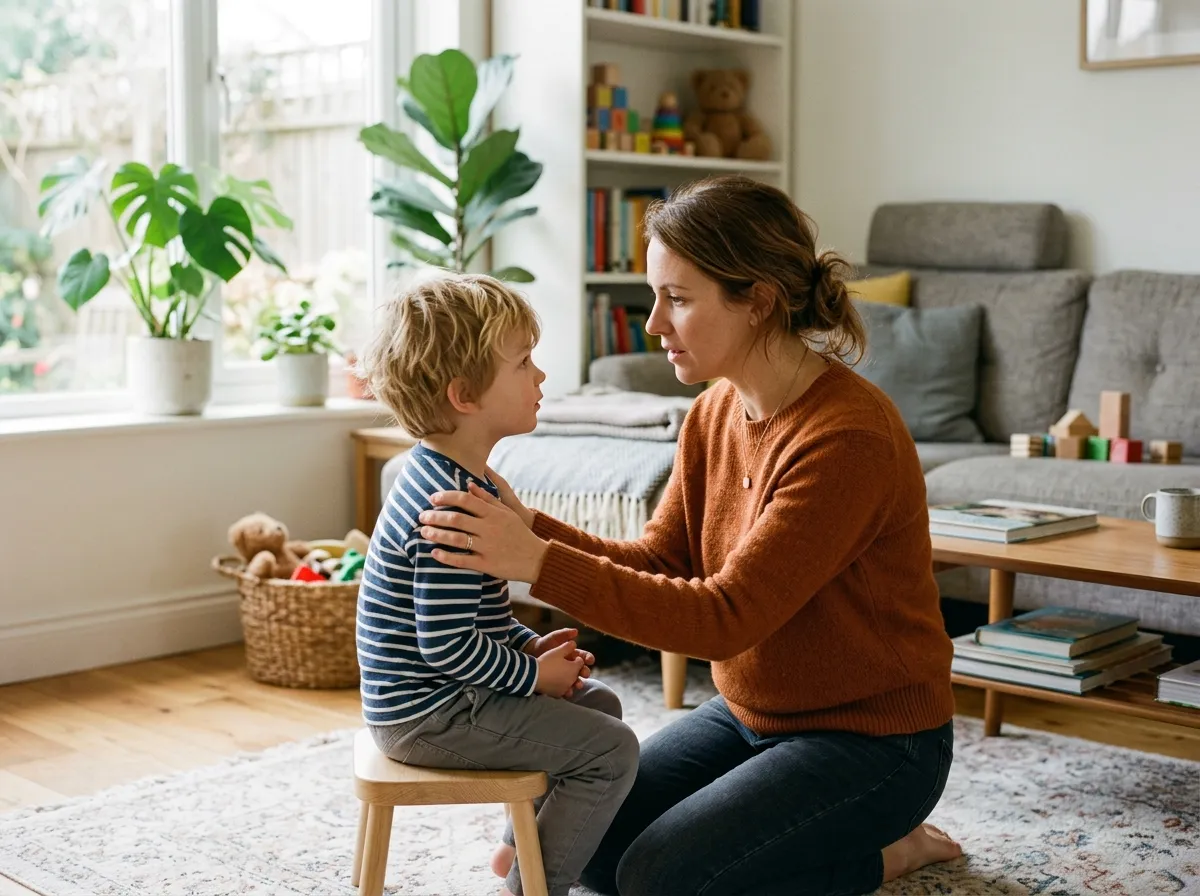
There was a season when “gentle parenting” was everywhere — on TikTok, in parenting books, shared in mom groups with an almost evangelical enthusiasm. Validate every feeling. Never raise your voice. Explain everything. And while the heart behind it is beautiful, many moms quietly started to feel like they were failing at it — exhausted by the emotional labor, unsure why it wasn’t working, and too guilty to admit they needed something different.
If that sounds familiar, you are not alone. A growing wave of parents in 2026 is stepping back from rigid parenting philosophies and embracing something more flexible, more honest, and frankly — more human. It is called hybrid parenting, and it might be exactly what you have been looking for without knowing it had a name.
What Is Hybrid Parenting?

Hybrid parenting is not a strict system or a new rulebook. It is the practice of intentionally blending elements from different parenting philosophies to create an approach that genuinely fits your child, your family, and your real life. Rather than committing fully to one style — gentle, authoritative, lighthouse, free-range — hybrid parents draw from all of them based on what the moment calls for.
Think of it less like following a recipe and more like cooking from instinct. You know the ingredients, you understand the flavors, and you adjust as you go.
According to research from Kiddie Academy, only 38 percent of Gen Z parents with young children use gentle parenting exclusively — and a striking 80 percent of parents now agree there is no one-size-fits-all approach to raising kids. Most hybrid parents are blending an average of three different parenting styles to shape their own approach.
Why Moms Are Moving Away From Gentle Parenting
To be clear, gentle parenting is not bad. The intention behind it, which centers around empathy, emotional validation, and respectful communication, is genuinely valuable. But the way it has been packaged and promoted online has made it feel impossible for many moms to sustain.
The pressure to be perfect
Social media turned gentle parenting into a performance. Every calm response to a tantrum became content. Every “I see you are frustrated” became a benchmark. And when moms lost their patience — as all humans eventually do — they felt like they had failed a test they never agreed to take.
The absence of boundaries
Over-explanation became a trap. Some interpretations of gentle parenting led parents to negotiate endlessly with toddlers, avoid the word “no,” and eliminate time-outs — leaving kids without the structure they actually need. Children, it turns out, do not just need to be heard. They need limits, and they need to know those limits are firm.
The burnout it created
The emotional labor of gentle parenting — done the way it is often portrayed online — is enormous. If you have ever felt like you were running on empty just from trying to be a “good” parent, there is a real reason for that. Parenting approaches that do not account for a mother’s well-being are not sustainable. Full stop.
What Hybrid Parenting Actually Looks Like

The beauty of hybrid parenting is that it looks different in every household — because every household is different. But there are a few core principles that most hybrid parents tend to share.
Empathy with boundaries
This is the cornerstone. You acknowledge your child’s feelings — genuinely, not performatively — and you still hold the limit. “I understand you are angry that we have to leave the park, and we are still leaving.” The emotion is valid. The boundary stands. Both things are true at the same time.
The American Psychological Association has long noted that authoritative parenting — warm, responsive, and firm — produces children who are more self-reliant, cooperative, and achievement-oriented. Hybrid parenting leans into exactly this combination.
Trusting your instincts
One of the most liberating shifts in hybrid parenting is the return to parental intuition. Nearly half of Gen Z parents now report trusting their own instincts slightly more than external advice. You know your child. You know your family’s rhythm. No TikTok psychologist knows that better than you do.
Adapting to the child, not the theory
A spirited four-year-old and a sensitive eight-year-old may need completely different responses to the same situation. Hybrid parenting permits you to adjust — to be firm with one child and gentler with another, or to be firm with the same child in the morning and gentler when they are overtired at night. You are not being inconsistent. You are being perceptive.
Breaking generational cycles with intention
Many parents today are doing deep, honest work around the ways they were raised. They want to keep what was good — resilience, responsibility, respect — and let go of what was harmful. Hybrid parenting creates space for that. By some estimates, 37 percent of young parents have made cycle-breaking central to how they parent. That is not a trend. That is a generation healing on purpose.
How Hybrid Parenting Helps Moms, Too
Here is what does not get talked about enough: a parenting style that burns you out is not good parenting. It is not noble. It is not what your children need from you.
Hybrid parenting is, at its core, sustainable. It makes room for you to be human — to have a hard day, to set a boundary because you are exhausted, to say “I need a minute” and mean it. If you have been struggling with the weight of doing it all, permitting yourself to parent flexibly — without guilt — can be genuinely life-changing.
Research shows that 90 percent of parents report that caregiving stress affects their sleep and overall health. Parenting approaches that treat the mother’s well-being as an afterthought are part of that problem. Hybrid parenting invites you to be both present and well.
Hybrid Parenting vs. Lighthouse Parenting — Are They the Same?

You may have heard of lighthouse parenting, the philosophy of being a steady, guiding presence for your children — visible and safe, but not controlling. Hybrid parenting and lighthouse parenting share a lot of DNA. Both reject the extremes of helicopter parenting and hands-off parenting. Both center connections are alongside the structure.
The difference is subtle but real. Lighthouse parenting is a philosophy with a defined identity. Hybrid parenting is more of a practice — it is the act of choosing, deliberately, what tools to use and when. You can absolutely be a lighthouse parent who uses hybrid methods. Many moms are.
How to Start Parenting Hybrid Style
If you are ready to give hybrid parenting a try, you do not need to overhaul everything at once. Start small and see what fits.
Audit what is working and what is not
Take an honest look at your current approach. What feels right in your gut? What leaves you frustrated or ashamed? What do you wish you could do differently without feeling like a failure? That audit is your starting point.
Pull from multiple frameworks
Read up on authoritative parenting, attachment parenting, and positive discipline. Take what resonates. You are not required to adopt an entire philosophy — take the tools that work and leave the rest.
Give yourself permission to change on the fly
The goal is not consistency for consistency’s sake. The goal is connection and growth — yours and your child’s. If something stops working, you are allowed to try something else. That is not failure. That is wisdom.
Talk to your partner or co-parent
If you are co-parenting, getting on the same page matters — not so you are robotic mirrors of each other, but so the fundamental values are shared. Children do not need two identical parents. They need two parents who are working toward the same thing with love.
The Bottom Line
Parenting has never been — and was never meant to be — a philosophy you download and execute perfectly. It has always been a relationship. Messy, evolving, deeply personal, and shaped by a thousand small moments that no parenting trend can fully prepare you for.
Hybrid parenting is not giving up on gentle parenting. It is not a rejection of empathy or emotional attunement. It is the acknowledgment that you are a whole, complex person raising a whole, complex child — and that the best parenting is the kind that actually holds up in real life.
You are already doing more than you think. Giving yourself the flexibility to do it your way is not a shortcut. It is the whole point.